
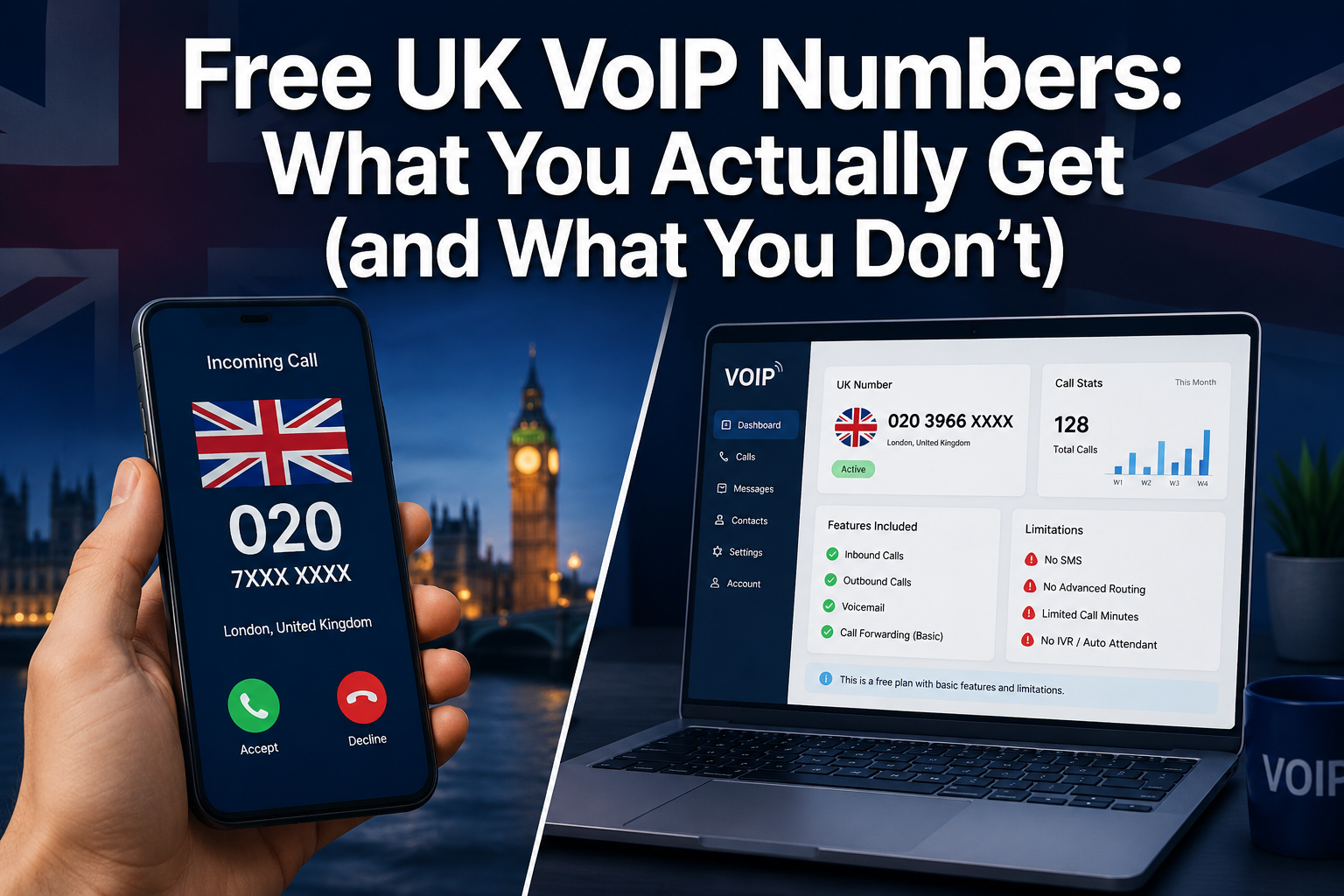
A recent survey of 500 UK small businesses found that 68% tried a free VoIP service before committing to a paid plan, but only 22% stuck with the free option long-term. The gap between expectation and reality when it comes to a free UK VoIP number is wider than most business owners anticipate.
The promise is compelling: professional business phone systems without the monthly bill. The reality involves trade-offs that can impact everything from call quality to customer perception. Understanding exactly what you’re getting, and more importantly, what you’re giving up, determines whether a free UK VoIP number serves your business or holds it back.
Key Takeaways
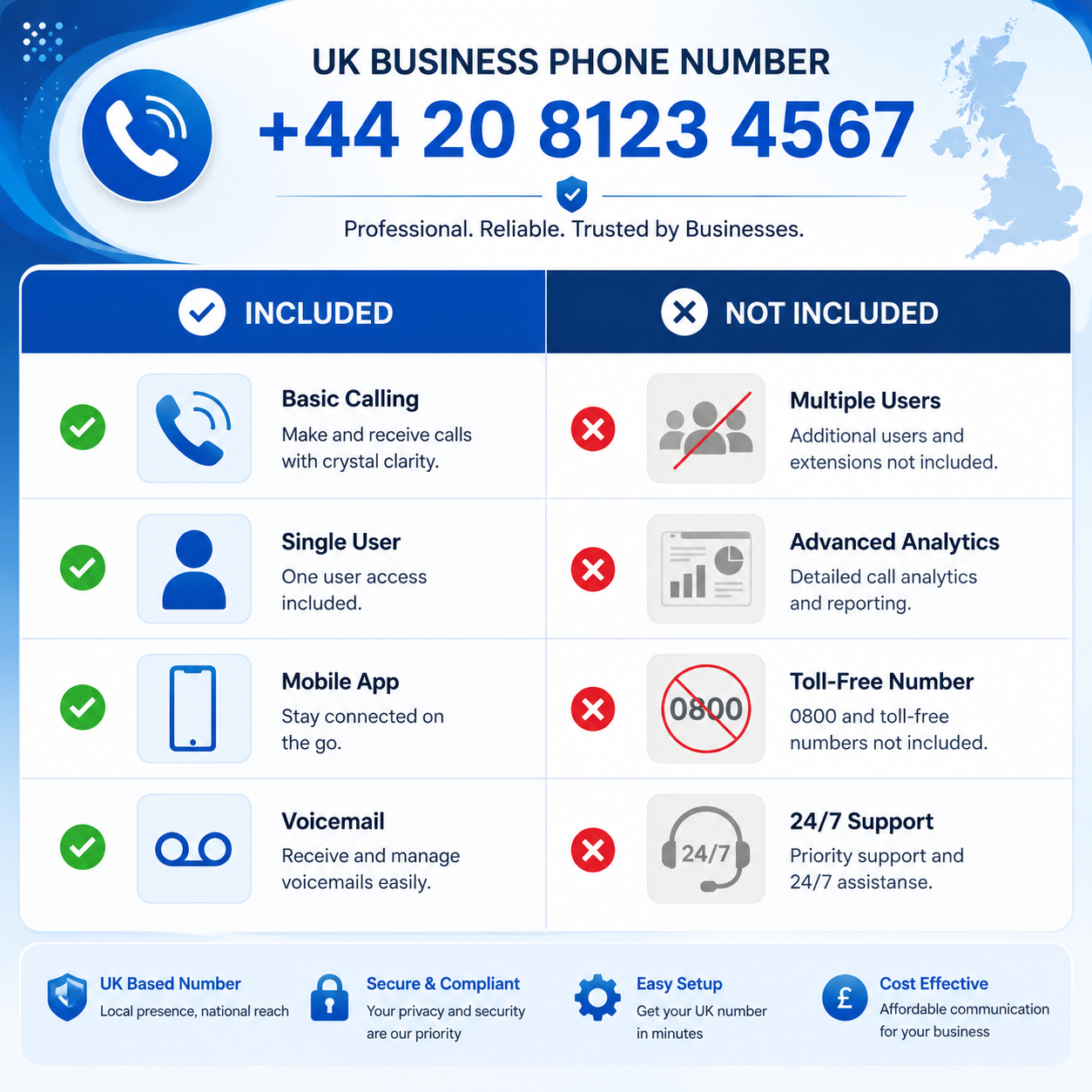
- Free UK VoIP numbers typically include basic calling and a mobile app, but exclude advanced features like call recording, analytics, and multiple users
- Most free plans impose strict limitations on call minutes (often 100-300 monthly), number of users (usually one), and customer support access
- Call quality and reliability on free plans often suffer due to lower bandwidth allocation and shared infrastructure
- Hidden costs emerge through premium number charges, limited porting options, and mandatory upgrades for business-critical features
- Free plans work best for solo entrepreneurs testing VoIP or handling very light call volumes, not for growing businesses needing reliable communications
What Free UK VoIP Number Providers Actually Include
Free UK VoIP number services share a remarkably similar baseline of features. Providers like Zadarma, VoIPstudio (limited trial), and certain tiers of Skype offer genuine UK geographic or mobile numbers at no upfront cost.
Basic calling functionality forms the core offering. You can make and receive calls using your assigned UK number through a mobile app or desktop software. Most providers support both incoming and outgoing calls, though outgoing minutes face strict caps.
A single user account comes standard. Free plans universally restrict access to one person, one device (or limited simultaneous devices), and one phone number. This works for sole traders but becomes a bottleneck the moment you need to add a team member.
Mobile and desktop apps provide the interface for your calls. These typically include basic features like call history, contacts management, and voicemail. The apps function adequately for straightforward calling but lack the polish and reliability of paid alternatives.
Voicemail appears on most free plans, though often with limitations. You might get voicemail-to-email notifications but not transcription. Storage limits typically restrict how many messages you can keep.
Basic call forwarding lets you redirect calls to another number, useful when you’re unavailable. However, advanced routing rules, time-based forwarding, or simultaneous ring to multiple devices usually require upgrading.
For businesses exploring what VoIP can do, these baseline features provide a functional starting point. The question becomes whether “functional” meets your actual business needs.
What You Don’t Get With a Free UK VoIP Number
The limitations of free UK VoIP numbers reveal themselves quickly in real-world use. These aren’t minor inconveniences, they’re fundamental constraints that affect business operations.
Call minute restrictions top the list. Free plans typically cap outgoing calls at 100 to 300 minutes monthly. For context, that’s roughly 5 to 15 minutes of calling per business day. A single client consultation can consume a week’s allocation. Incoming calls may be unlimited, but if you can’t call prospects back, the number’s value diminishes sharply.
No team features means no call queues, no ring groups, no auto-attendants, and no ability to transfer calls between colleagues. Each of these features defines modern business phone systems. Without them, you’re running a personal phone line, not a business communications system.
Limited or no customer support leaves you troubleshooting alone. Free users typically access only community forums or knowledge bases. When call quality degrades or your number stops working, you’re on your own. Paid plans get priority support queues; free users wait indefinitely.
Call recording and analytics don’t exist on free tiers. You can’t record calls for training, compliance, or quality assurance. You won’t see metrics on call volume, peak times, missed calls, or average handling time, data that informs staffing and process decisions.
No toll-free numbers or premium number types. Free plans assign standard geographic (020, 0121, etc.) or mobile numbers. If you want an 0800 or 0333 number for professional credibility, you’ll pay for it.
Advertising and branding sometimes appear. Certain free providers insert audio ads before calls connect or display their branding prominently in apps. Your callers hear someone else’s marketing message before reaching you.
Number porting restrictions prevent you from bringing your existing business number to a free plan. You’re assigned a new number, forcing you to update every business listing, website, and marketing material. When you eventually upgrade or switch providers, porting that free number may prove difficult or impossible.
Reduced call quality and reliability stem from infrastructure priorities. Free users share bandwidth and server resources with paying customers, and paying customers get priority. During peak usage, free plan call quality degrades first. Dropped calls, latency, and audio artifacts become more frequent.
Understanding these hidden costs helps frame the true value proposition of free services.
The Real-World Performance Gap
The technical specifications tell only part of the story. Real-world performance separates adequate from unusable.
Call quality on free plans varies dramatically by provider and time of day. During business hours, when network load peaks, free users experience noticeably worse audio quality than paid subscribers on the same network. Jitter, packet loss, and latency, the technical culprits behind poor call quality, affect free tiers disproportionately.
One UK marketing consultant reported that client calls on her free VoIP number frequently required repeating information due to audio dropouts. After switching to a paid plan, the issues disappeared. The infrastructure was identical; the bandwidth allocation wasn’t.
Reliability issues manifest as failed call connections, delayed notifications, and sporadic app crashes. Free services lack the redundancy and failover systems that keep paid business VoIP providers operational during outages.
Security and privacy receive less attention on free tiers. Encryption may be basic or absent. Call metadata might be retained longer or used for analytics. For businesses handling sensitive client information, these gaps create compliance risks.
When a Free UK VoIP Number Actually Makes Sense
Despite limitations, free UK VoIP numbers serve specific use cases effectively.
Testing VoIP technology before committing to a paid system makes practical sense. If you’ve never used cloud-based communications, a free number lets you experience the interface, call quality, and workflow without financial risk. This trial period helps you understand what to expect during transition to a full VoIP system.
Very low call volume scenarios work within free plan constraints. If you receive occasional inquiries and make fewer than 100 outgoing calls monthly, the limitations won’t bind. A side business, hobby project, or secondary contact number fits this profile.
Temporary projects benefit from free numbers with defined end dates. A three-month pop-up shop, seasonal service, or short-term campaign doesn’t justify long-term contracts. A free UK VoIP number provides professional presence without ongoing commitment.
Solo entrepreneurs in early stages can bootstrap communications costs while validating their business model. Once revenue stabilizes and call volume increases, upgrading becomes a natural progression rather than a forced expense.
Personal use with business appearance suits freelancers who want to separate business calls from personal mobile numbers without paying for a second SIM. The free VoIP number provides that separation, even if it lacks enterprise features.
What to Look for in Free UK VoIP Number Providers
Not all free offerings deliver equal value. Certain factors distinguish useful services from frustrating experiences.
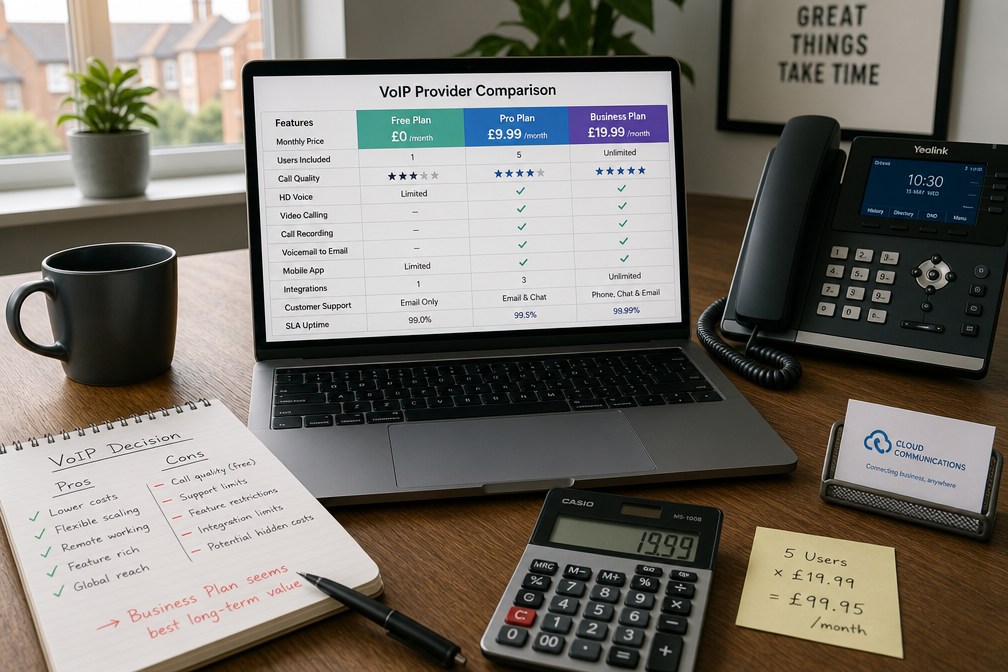
Transparent limitations matter more than generous-sounding promises. Providers that clearly state minute caps, user limits, and feature restrictions upfront demonstrate honesty. Those that bury limitations in fine print or use vague “fair use” policies create unpleasant surprises.
Upgrade path clarity indicates whether the provider views free users as potential customers or disposable leads. Can you seamlessly upgrade to a paid plan while keeping your number? What features unlock at each pricing tier? Clear pricing models signal a provider worth considering long-term.
App quality and stability directly impact daily usability. Download the app before committing. Test call quality, interface responsiveness, and battery drain. Poor app performance makes even generous free plans unusable.
Number portability determines your exit options. Can you port the free number to another provider if you outgrow the service? Some free numbers are permanently locked to the issuing provider, creating switching costs that trap you into upgrading with them.
Geographic number availability affects local presence. If you need a London 020 number but the provider only offers 0330 numbers on free plans, the service doesn’t meet your needs regardless of other features.
Minimum internet requirements for acceptable call quality should match your actual connectivity. Check whether the provider specifies what speed internet you need for VoIP and whether your current connection meets those standards.
The Hidden Costs That Aren’t Really Free
“Free” rarely means zero cost when examined closely.
Time investment in setup, troubleshooting, and working around limitations carries opportunity cost. Hours spent diagnosing call quality issues or manually tracking calls because analytics don’t exist could be spent on revenue-generating activities.
Professional credibility suffers when call quality is poor or features are missing. A dropped call with a potential client costs more than any monthly VoIP fee. Inability to transfer calls professionally or provide hold music creates negative impressions.
Scalability barriers force disruptive transitions. Starting with a free number, then switching to a paid service months later means updating all your business materials twice. Number porting timelines can leave you unreachable for days during the transition.
Feature gaps require workarounds that add complexity. Without call recording, you might subscribe to a separate recording service. Without analytics, you might manually log calls in spreadsheets. These bolt-on solutions cost time and often money.
Upgrade pressure builds as your business grows. The moment you need a second user or exceed minute limits, you’re forced to upgrade, often at a moment when you’re least prepared to evaluate alternatives properly.
Making the Free vs Paid Decision
The choice between free and paid UK VoIP numbers hinges on honest assessment of your needs and constraints.
Calculate your actual call volume over a typical month. Include both incoming and outgoing calls. If you’re consistently under 200 minutes outgoing and handle calls solo, free plans remain viable. Above that threshold, you’re paying through limitations rather than subscription fees.
Project six months forward. Will you still be a solo operation? Will call volume remain stable or grow? VoIP systems work best when they scale with you. Starting with a system that accommodates growth, even if you’re not there yet, prevents disruptive transitions.
Value your time appropriately. If troubleshooting VoIP issues costs you billable hours, the “free” service is expensive. Paid plans with proper support become cost-effective quickly for professionals billing £50+ per hour.
Consider customer perception. If your business positions itself as premium or professional, communications quality must match. Poor call quality or inability to transfer calls professionally undermines that positioning more than you might realize.
Evaluate alternatives beyond free vs paid. Some providers offer low-cost entry tiers (£5 to £10 monthly) that include essential business features without the limitations of free plans. These represent better value for most growing businesses than either extreme.
For comprehensive guidance on available options, see our detailed breakdown of free UK VoIP number options in 2026.
Frequently Asked Questions
Can I use a free UK VoIP number for business legally?
Yes, free UK VoIP numbers are legal for business use. However, ensure your provider complies with Ofcom regulations and that you meet any business registration requirements for your industry. Some sectors (financial services, legal) have specific telecommunications compliance requirements that free services may not satisfy.
Will customers know I’m using a free VoIP service?
Not directly from the number itself, a UK geographic number looks identical whether it’s free or paid. However, call quality issues, inability to transfer calls, or ads before connection may signal a basic setup. Professional features matter more than the price you paid.
Can I port my existing business number to a free VoIP plan?
Rarely. Most free VoIP plans don’t support number porting in. You’ll be assigned a new number from their available pool. This limitation alone makes free plans impractical for established businesses with existing numbers customers recognize.
What happens to my free VoIP number if I don’t use it?
Inactivity policies vary by provider. Most reclaim unused numbers after 30 to 90 days of no incoming or outgoing calls. If you’re keeping a number for occasional use, make a test call monthly to maintain it. Check your provider’s specific terms.
Are free UK VoIP numbers suitable for customer service lines?
Generally no. Customer service requires call queuing, multiple agents, call recording for quality assurance, and reliable uptime, features absent from free plans. Even small customer service operations need at least entry-level paid plans to function effectively.
Can I get a toll-free 0800 number on a free VoIP plan?
No. Toll-free and non-geographic numbers (0800, 0808, 0333, etc.) are never included in free plans. These number types carry costs for providers, so they’re reserved for paid tiers. Free plans offer standard geographic or mobile numbers only.
Conclusion
Free UK VoIP numbers deliver exactly what they promise: basic calling functionality at no monthly cost. For solo entrepreneurs testing VoIP technology, handling minimal call volumes, or running temporary projects, they provide genuine value. The limitations, restricted minutes, single-user access, absent business features, and variable call quality, don’t matter when your needs align with what’s offered.
For growing businesses, customer-facing operations, or anyone requiring reliable professional communications, those same limitations become deal-breakers. The hidden costs in time, credibility, and operational friction quickly exceed the savings from avoiding a £10 to £20 monthly fee.
The decision isn’t really free versus paid, it’s whether your business communications deserve the same investment as your website, marketing, or other customer touchpoints. Most businesses discover that reliable, feature-complete VoIP for small business pays for itself through improved efficiency and customer experience.
Start by honestly assessing your call volume, growth trajectory, and feature requirements. If a free UK VoIP number meets those needs today and six months from now, use it without hesitation. If you’re already stretching against its limitations or will be soon, invest in a proper business phone system from the start. Your future self, and your customers, will appreciate the foresight.