
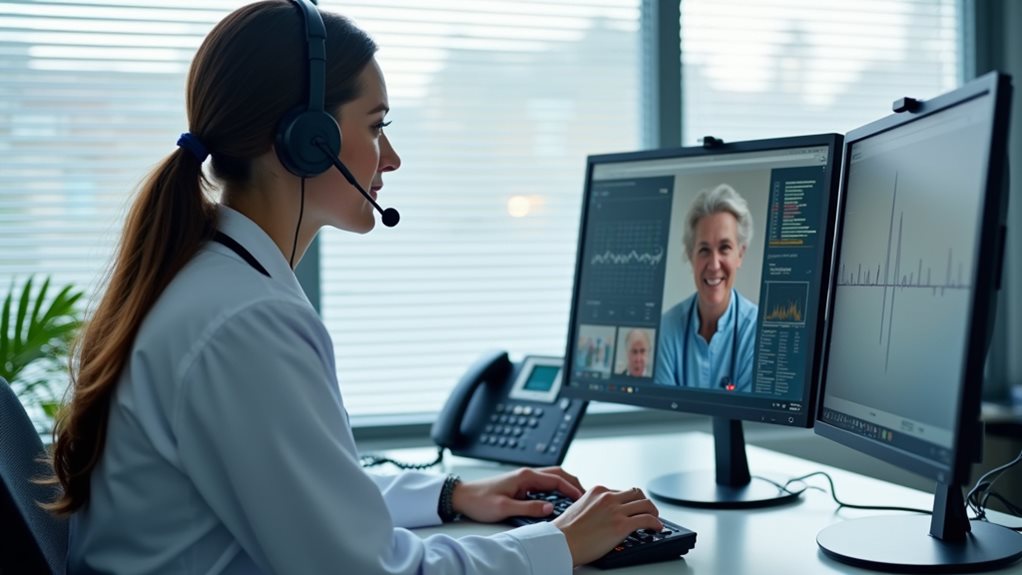
VoIP technology is transforming telehealth by creating secure, HIPAA-compliant virtual examination rooms with crystal-clear audio and video connections. You’ll benefit from improved healthcare access regardless of location, reduced costs through scalable solutions, and better patient monitoring with integrated health devices. The technology seamlessly connects with existing medical records systems while maintaining robust security protocols for patient privacy. Discover how this digital revolution is breaking down barriers between you and quality healthcare services.
The Technology Behind VoIP-Enabled Telehealth
While Voice over Internet Protocol (VoIP) has revolutionized how we communicate, its integration with telehealth services represents one of today’s most notable technological advancements in healthcare delivery.
At its core, VoIP protocols convert your voice into digital signals that travel over the internet rather than traditional phone lines, enabling crystal-clear audio and high-definition video connections between you and your healthcare provider.
Modern telehealth applications leverage these VoIP capabilities to create secure, HIPAA-compliant virtual examination rooms where you’ll experience minimal latency and maximal privacy.
The technology incorporates end-to-end encryption, guaranteeing your medical consultations remain confidential.
You’ll find that today’s systems often include specialized features like medical device integration, real-time essential sign monitoring, and screen-sharing capabilities for reviewing test results or medical imaging during your appointment. Furthermore, the enhanced communication tools provided by VoIP facilitate better patient engagement and satisfaction levels, making telehealth a more comprehensive and effective solution for healthcare delivery.
Breaking Down Geographic Barriers to Healthcare Access
VoIP-powered telehealth has revolutionized healthcare access for rural communities through specialized connectivity solutions that overcome traditional infrastructure limitations. You’ll find that these technologies enable medical professionals to conduct cross-border consultations, connecting patients with specialists regardless of national boundaries or geographic isolation. Your ability to receive quality healthcare no longer depends on proximity to major medical centers, as VoIP bridges these divides with reliable, cost-effective communication channels that work even in areas with limited bandwidth. Many healthcare providers are now leveraging VoIP services to enhance their patient communication and overall service delivery.
Rural Connectivity Solutions
Despite vast technological advancements in healthcare, residents in rural areas continue to face substantial barriers when accessing quality medical services. The digital divide remains pronounced, with many remote communities lacking the infrastructure needed for reliable VoIP-based telehealth services.
You’ll find that rural broadband initiatives are increasingly critical in addressing these disparities. Federal programs and private-public partnerships are expanding high-speed internet access to previously underserved regions, catalyzing telehealth adoption among rural populations. Solutions like portable hotspots, satellite internet services, and community broadband hubs now offer viable alternatives where traditional fiber infrastructure isn’t feasible.
When implemented effectively, these connectivity solutions don’t just improve healthcare access—they transform entire communities by enabling consistent, quality virtual care that reduces the burden of travel and improves health outcomes. Moreover, VoIP technology can significantly enhance communication and collaboration among healthcare providers, ensuring patients receive timely and effective care regardless of their location.
Cross-Border Medical Consultations
Cross-border medical consultations represent the next frontier in telehealth’s evolution, extending beyond rural connectivity to transcend international boundaries.
You’re now able to connect with specialists worldwide, regardless of your location, creating unprecedented access to global health expertise.
VoIP technology enables these international healthcare connections through:
- Real-time translation services integrated into telehealth platforms
- Secure transmission of medical records across jurisdictions
- Virtual second opinions from specialists unavailable in your region
- Patient education resources customized to cultural contexts
- Collaborative care teams spanning multiple countries
These innovations help you overcome previously insurmountable barriers to specialized care.
When your local healthcare options are limited, you’re no longer restricted by geography.
Instead, you can leverage VoIP-powered telehealth to access diagnostic expertise and treatment recommendations from the most qualified professionals worldwide. VoIP technology is instrumental in maintaining strong team connections, ensuring patient care thrives irrespective of physical location.
Cost Efficiency and Resource Optimization

VoIP-based telehealth systems greatly reduce your healthcare organization’s capital expenses by eliminating the need for extensive physical infrastructure and specialized hardware. You’ll appreciate the flexibility of scalable billing options that allow you to pay only for the services and features you actually use, rather than investing in costly equipment that might sit idle. These cost efficiencies translate directly into optimized resource allocation, enabling your practice to redirect funds toward patient care improvements while maintaining competitive pricing structures in an increasingly digital healthcare environment. Additionally, VoIP technology supports seamless integration, allowing telehealth services to enhance communication between healthcare providers and patients effectively.
Reduced Infrastructure Expenses
While traditional healthcare systems require extensive physical infrastructure, telehealth services leveraging VoIP technology considerably reduce these expenses through virtual alternatives.
You’ll achieve notable infrastructure savings by eliminating the need for multiple physical locations while boosting operational efficiency across your healthcare organization.
Consider these key cost-reducing benefits:
- Elimination of dedicated telephone lines and hardware, replaced by internet-based communication systems
- Reduced physical space requirements, allowing repurposing of existing facilities
- Decreased maintenance costs associated with traditional telecommunications equipment
- Lower utility expenses from minimized on-site operations
- Elimination of redundant systems across multiple locations through centralized VoIP solutions
Moreover, VoIP systems can reduce monthly phone bills significantly, further contributing to overall cost-effectiveness in telehealth services.
Scalable Billing Options
Three transformative billing models make VoIP telehealth solutions remarkably cost-efficient for healthcare organizations of any size.
You’ll appreciate the pay-as-you-go option, which eliminates hefty upfront investments and lets you scale services based on actual usage patterns. Custom pricing models allow you to tailor your telehealth communication expenses to match your facility’s unique needs and budget constraints.
Additionally, subscription-based flexible payment solutions offer predictable monthly costs while providing access to premium features that improve patient care.
You won’t face the traditional financial burdens of hardware maintenance or system upgrades. These scalable approaches guarantee you’re never paying for unused capacity, optimizing your resources whether you’re running a small clinic or managing a multi-location healthcare network. This aspect aligns with VoIP’s cost-cutting features that help streamline operational expenses.
VoIP’s billing versatility represents a considerable advancement in healthcare resource management.
Enhanced Patient Monitoring and Remote Diagnostics
Telehealth services have revolutionized patient monitoring by enabling healthcare providers to track crucial signs and conduct preliminary diagnoses from virtually anywhere.
When you integrate VoIP technology with telehealth platforms, you’ll discover improved patient engagement and more effective remote therapy options.
Your practice can benefit from these advanced monitoring capabilities:
- Real-time health indicators tracking through connected devices that transmit data directly to your clinical dashboard
- AI-powered symptom analysis that flags concerning patterns before they become emergencies
- High-definition video assessments for visual diagnoses of skin conditions, mobility issues, and neurological responses
- Secure sharing of diagnostic imagery and test results with specialists for rapid consultation
- Custom patient portals that enable self-reporting of symptoms and medication adherence. Additionally, leveraging VoIP can result in cost benefits that free up resources for enhanced patient care initiatives.
Security and Compliance in Virtual Healthcare Delivery

As your telehealth services expand, protecting patient information becomes paramount in the virtual care environment. You’ll need to implement robust data protection measures that comply with HIPAA and other healthcare regulatory standards.
While VoIP offers tremendous benefits for patient care, it also creates potential vulnerabilities if not properly secured. Consider encrypting all communications, implementing multi-factor authentication, and regularly auditing your security protocols.
You’re responsible for safeguarding sensitive patient data at every touchpoint in your telehealth ecosystem. Many providers overlook the need for staff training on security best practices, which can undermine even the most sophisticated technical safeguards. It’s essential to be aware of VoIP security risks to better protect patient information.
Remember that compliance isn’t just about avoiding penalties—it’s about maintaining patient trust in your virtual care delivery. When patients feel their information is secure, they’ll more readily accept telehealth solutions.
Integrating Voip With Existing Medical Information Systems
When implementing VoIP technology in your healthcare practice, seamless integration with your existing electronic health record (EHR) systems becomes critical for maintaining operational efficiency.
Data interoperability serves as the backbone of successful integration, allowing your voice communications to work in harmony with patient records and clinical workflows.
Seamless data interoperability connects your communications with clinical systems, creating a unified healthcare ecosystem.
You’ll need to evaluate several key factors for successful system integration:
- API compatibility between your VoIP platform and EHR software
- Data encryption protocols that maintain HIPAA compliance across systems
- Workflow automation opportunities that reduce redundant documentation
- Single sign-on capabilities to streamline provider access
- Customizable integration points based on your practice’s specific needs
Moreover, ensuring end-to-end encryption is essential for protecting sensitive patient information during VoIP communications.
Frequently Asked Questions
How Do Patients Without Tech Skills Access Voip Telehealth Services?
You’ll access VoIP telehealth through simplified interfaces, guided patient education sessions, and dedicated tech support. Healthcare providers offer step-by-step instructions, family member assistance options, and phone-based alternatives for less tech-savvy patients.
Can Voip Telehealth Replace Emergency Medical Services?
No, VoIP telehealth can’t replace emergency medical services. You’ll still need traditional emergency response for life-threatening situations. VoIP limitations include connectivity issues and inability to provide immediate physical intervention during critical emergencies.
What Happens During Power Outages or Internet Disruptions?
During outages, you’ll lose VoIP telehealth access unless you’ve implemented power backup solutions like generators or UPS systems. You can utilize internet alternatives such as cellular data, mobile hotspots, or satellite connections to maintain critical services.
Are Voip Telehealth Consultations Covered by Insurance?
Yes, many insurance providers cover VoIP telehealth consultations. You’ll need to check your specific insurance reimbursement policies, as coverage varies by provider and state telehealth policy requirements have evolved considerably recently.
How Do Providers Maintain Personal Connection Through Virtual Interactions?
You’ll maintain personal connection by using video empathy techniques like eye contact, active listening, and responsive body language. Focus on patient engagement through personalized conversations, clear communication, and follow-up questions during your virtual consultations.
Final Thoughts
You’re witnessing a healthcare revolution powered by VoIP technology. As you integrate these solutions into your practice, you’ll break geographic barriers while optimizing costs and improving patient care. The challenges of security and system integration shouldn’t deter you—they’re simply hurdles on the path to modernization. By embracing VoIP-enabled telehealth now, you’re positioning yourself at the forefront of medicine’s digital transformation.