

To secure your VoIP system, implement multi-factor authentication and encrypt all communications using TLS/SRTP protocols. Segment your network to isolate voice traffic, configure firewalls specifically for VoIP, and deploy session border controllers to filter unauthorized access. Train employees to recognize vishing attempts and social engineering tactics. Regularly audit your system for vulnerabilities and establish a clear incident response plan. The thorough security approach outlined below will transform your vulnerable voice system into a fortress against cyber criminals.
Understanding Common VoIP Security Threats
Before implementing any VoIP security measures, you’ll need to familiarize yourself with the common threats that target these systems. A thorough VoIP vulnerabilities overview reveals that these networks face unique risks compared to traditional phone systems.
The most prevalent threats include call interception, service theft, denial-of-service attacks, and vishing (voice phishing) attempts. Additionally, VoIP security risks often include phishing threats and malware attacks that can lead to data breaches or service disruptions.
Your threat mitigation strategies should address these vulnerabilities systematically. Start by identifying potential weak points in your current setup—unsecured networks, outdated firmware, and weak authentication protocols are common culprits.
Systematically tackle VoIP vulnerabilities by first identifying your system’s weak points—they’re often hiding in plain sight.
Don’t underestimate social engineering tactics either; attackers often exploit human error rather than technical flaws. By understanding these threats in context, you’ll be better equipped to implement appropriate safeguards and create a resilient VoIP infrastructure that keeps your communications secure.
Implementing Strong Authentication Protocols
Securing your VoIP system demands robust authentication beyond simple passwords, which is why you’ll need to implement multi-factor authentication methods that combine something you know with something you possess.
You can strengthen your defense perimeter with certificate-based access controls that verify the identity of devices and users attempting to connect to your network.
For maximum security, consider integrating biometric verification solutions such as voice recognition or fingerprint scanning that provide an additional layer of protection against unauthorized access attempts. Additionally, employing encryption protocols like TLS and SRTP can further safeguard your VoIP calls from eavesdropping and unauthorized interception.
Multi-Factor Authentication Methods
Effective user authentication strategies combine something you know (password), something you have (security token or smartphone), and something you’re (biometric verification). Consider implementing time-based one-time passwords sent to your team’s mobile devices, which expire after single use. For improved protection, fingerprint or facial recognition adds another verification layer that’s nearly impossible to replicate. These secure access methods create multiple barriers that hackers must overcome simultaneously. While implementing MFA might require additional setup time, the protection it provides against credential theft and brute force attacks makes it a vital component of any thorough VoIP security framework. Additionally, utilizing proactive measures like regular security audits can help identify potential vulnerabilities in your system.
Certificate-Based Access Controls
Beyond multi-factor authentication, certificate-based access controls represent a sophisticated layer in your VoIP security architecture. These digital certificates establish encrypted connections between clients and your VoIP server, creating a trust framework that’s difficult for attackers to breach.
Implementing a robust certificate management system allows you to issue, track, and revoke certificates as needed. You’ll want to establish clear certificate policies—determining who receives certificates, how they’re distributed, and when they expire. This approach greatly reduces unauthorized access risks.
For peak security, consider integrating certificate-based authentication with your existing access control mechanisms. This creates a unified security framework where users must present both valid credentials and appropriate certificates.
Additionally, neglecting security can lead to vulnerabilities, data breaches, and call spoofing, emphasizing the importance of strong authentication protocols in safeguarding your VoIP communication. Remember to regularly audit your certificate infrastructure, guaranteeing revoked credentials can’t be used to access your VoIP systems during employee changes or security incidents.
Biometric Verification Solutions
Modern VoIP systems increasingly incorporate biometric verification as a cornerstone of robust authentication protocols.
You’ll find these technologies offer security beyond traditional passwords, creating a formidable barrier against unauthorized access.
When implementing biometric authentication methods, consider these key advantages:
- Voiceprint recognition systems analyze unique speech patterns, allowing seamless verification during calls without additional user actions.
- Fingerprint or facial recognition provides multi-factor authentication, greatly reducing impersonation risks.
- Behavioral biometrics track typing patterns and interaction habits, adding invisible security layers.
You can integrate these solutions with existing security frameworks, creating a defense-in-depth approach. Additionally, implementing strong authentication methods is vital for bolstering your VoIP security efforts.
Encrypting VoIP Traffic and Communications
Encrypting your VoIP traffic with end-to-end encryption guarantees your conversations remain private, even if intercepted by malicious actors.
You’ll want to implement TLS/SRTP protocols for your transport layer, which creates a secure tunnel for your voice data to travel through without exposure to prying eyes.
While configuring encryption might seem technically challenging, modern VoIP systems typically offer user-friendly options that you can enable within your administrative dashboard to protect all communications instantly. Additionally, by utilizing DTLS-SRTP for media security, you enhance the confidentiality and integrity of your VoIP calls, ensuring robust protection against cyber threats.
End-to-End Encryption Implementation
When you establish a robust VoIP system, implementing end-to-end encryption should be your top priority to safeguard sensitive communications.
Modern VoIP protocols offer various encryption standards that you’ll need to configure properly for maximum protection.
You’ll want to focus on:
- Implementing SRTP (Secure Real-time Transport Protocol) to encrypt voice data packets during transmission
- Configuring TLS (Transport Layer Security) for SIP signaling to prevent call interception
- Setting up proper certificate management systems to authenticate encryption keys
Don’t settle for basic encryption that only covers part of your communication chain.
True end-to-end protection means securing data from the moment it leaves your device until it reaches its destination.
Additionally, prioritizing VoIP system security is essential to protect against data breaches that could lead to significant financial losses.
When selecting encryption standards, balance security requirements with performance considerations to avoid degrading call quality.
Transport Layer Protection
As hackers increasingly target communication networks, transport layer protection serves as your critical defense line against VoIP traffic interception. Implementing Transport Layer Security (TLS) encrypts your voice data packets as they travel between endpoints, making them unreadable to potential eavesdroppers.
You’ll need to configure your VoIP servers to use TLS protocols and disable outdated versions vulnerable to known exploits. Pay special attention to addressing VoIP protocol vulnerabilities, particularly in SIP (Session Initiation Protocol) implementations. Many attacks exploit these weaknesses to perform man-in-the-middle attacks or denial of service.
Don’t forget to regularly update your TLS certificates and verify they’re from trusted authorities. When properly implemented, transport layer protection creates a secure tunnel for your communications, guaranteeing that sensitive conversations remain private even when traversing untrusted networks. Furthermore, employing encryption protocols like SRTP ensures that both voice data and signaling information are thoroughly protected against unauthorized access.
Securing Your VoIP Network Infrastructure

The foundation of any robust VoIP system lies in properly securing your network infrastructure. You’ll need to implement strategic defenses that protect your voice data from potential intruders while maintaining call quality.
Security isn’t optional for VoIP—it’s the bedrock upon which reliable voice communications are built.
Network segmentation serves as your first line of defense, separating voice traffic from regular data and limiting potential attack vectors.
- Configure dedicated VLANs for your VoIP traffic to isolate it from other network activities
- Implement specialized firewall configurations that recognize and prioritize SIP and RTP protocols
- Deploy session border controllers at network edges to monitor and filter unauthorized connection attempts
Don’t underestimate the importance of regularly auditing your network setup. Additionally, prioritize VoIP security as it is essential for safeguarding network and data integrity against rising cyber threats.
Monitoring for Suspicious Call Activity
Vigilant monitoring forms the cornerstone of any effective VoIP security strategy. By implementing robust call pattern analysis, you’ll quickly identify unusual activities that might indicate security breaches.
Set up your system to flag anomalies like unexpected international calls, unusual call volumes, or communications during non-business hours.
Anomaly detection tools can automatically scan your network traffic, alerting you when call behaviors deviate from established baselines. You’ll want to customize these thresholds based on your organization’s specific calling patterns.
Consider integrating real-time monitoring dashboards that visualize traffic flows and highlight potential threats.
Don’t forget to regularly review your call logs—they’re goldmines of security intelligence. When you notice suspicious patterns, act swiftly to investigate, potentially blocking suspicious numbers or IP addresses until you’ve confirmed their legitimacy. Additionally, regular software updates are essential for protecting your VoIP system from known vulnerabilities, ensuring compliance with stringent regulations.
Establishing Employee Security Training for VoIP

Your company’s most important security vulnerability often isn’t your technology—it’s your people. Without proper training, even the most robust VoIP system remains susceptible to human error.
Developing thorough employee awareness programs guarantees your team understands security protocols and recognizes potential threats.
Effective VoIP security training should include:
- Regular workshops on recognizing social engineering tactics like vishing (voice phishing) attempts
- Hands-on sessions for secure password management and multi-factor authentication setup
- Scenario-based training that simulates real-world VoIP security breaches
Don’t underestimate the impact of well-trained staff. When employees understand the “why” behind security protocols, they’re more likely to follow them consistently.
Security protocols thrive when employees grasp their purpose, not just their procedures.
Schedule quarterly refresher courses to address emerging threats and reinforce best practices, keeping your VoIP communications secure.
Developing Incident Response Plans for Voice Systems
Even with well-trained employees, VoIP security incidents can still occur. When they do, you’ll need robust incident response strategies ready to deploy immediately. Your plan should clearly define roles, responsibilities, and communication chains that activate when voice systems are compromised.
Document specific voice system protocols for different scenarios, including service disruptions, eavesdropping attempts, and toll fraud. Create a step-by-step playbook that includes containment procedures, evidence collection methods, and recovery processes.
You’ll want to establish thresholds for escalation and notification of leadership, customers, or regulatory authorities.
Don’t forget to regularly test your incident response plan through tabletop exercises or simulations. These practice runs help identify gaps in your procedures and guarantee your team can confidently execute the plan when real incidents occur.
Conducting Regular VoIP Security Assessments
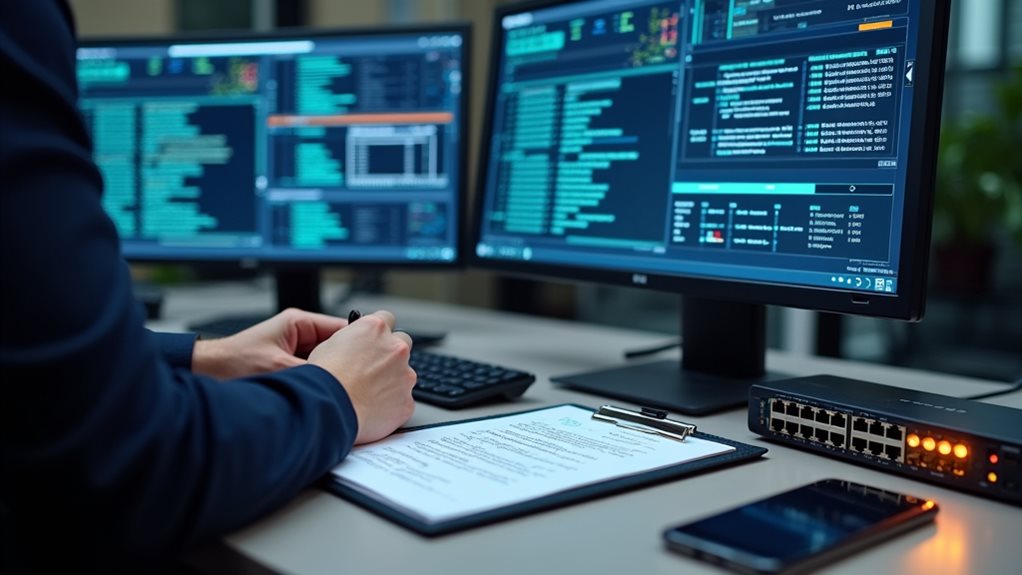
Because security threats evolve constantly, regular assessment of your VoIP system’s defenses isn’t optional—it’s essential.
In today’s threat landscape, neglecting your VoIP security assessment isn’t just risky—it’s an invitation to attackers.
Implementing a thorough VoIP vulnerabilities assessment schedule helps you identify weaknesses before attackers do. You’ll want to conduct these evaluations quarterly, or whenever you make substantial changes to your infrastructure.
Your security policy review should encompass three key assessment areas:
- Technical vulnerability scanning using specialized VoIP penetration testing tools that can identify protocol weaknesses and configuration flaws
- Authentication and access control evaluation to guarantee only authorized users can access your voice systems
- Traffic analysis to detect unusual patterns that might indicate ongoing attacks or data exfiltration
Don’t wait for a breach to reveal your system’s vulnerabilities.
Proactive assessment not only strengthens your security posture but also demonstrates your commitment to protecting sensitive communications.
Frequently Asked Questions
What Voip Security Certifications Should My IT Team Pursue?
You should prioritize CompTIA Security+, CCNP Collaboration, and VoIP security training courses. Cisco’s VoIP certifications and CISA are also valuable for your IT team to strengthen your telecommunications security posture.
How Do Hosted Voip Solutions Compare to On-Premise for Security?
Hosted VoIP typically offers better cloud security with automatic updates, but you’ll sacrifice control. On-premise gives you full oversight of system vulnerabilities but requires your team to actively manage and secure the infrastructure themselves.
Can Legacy Analog Phone Systems Integrate Securely With Modern Voip?
Yes, you can securely integrate legacy analog systems with VoIP using specialized gateways. For a secure shift, you’ll need proper encryption, updated firmware, and regular security audits on all integration points and devices.
What Insurance Covers Voip-Specific Security Breaches?
You’ll need cyber liability or specialized VoIP insurance policies that explicitly cover telecommunications breaches. Look for breach coverage options that include service interruption, data theft, and ransom payments following VoIP-specific security incidents.
How Do International Regulations Affect Voip Security Compliance Requirements?
International standards like GDPR, CPPA, and ISO27001 impact your VoIP security requirements across borders. You’ll face compliance challenges when managing call data that crosses jurisdictions, requiring country-specific privacy and encryption protocols.
Final Thoughts
Securing your VoIP system isn’t a one-time project but an ongoing commitment. You’ll need to regularly update your security measures, train your staff, and monitor for emerging threats. By implementing the strategies we’ve outlined, you’re not merely protecting calls—you’re safeguarding your company’s reputation and sensitive information. Remember, in today’s digital environment, your communication system’s security is only as strong as your weakest link.