
To protect against VoIP spam and robocalls, enable built-in call blocking features on your smartphone like iPhone’s “Silence Unknown Callers” or Android’s “Spam Protection.” Consider using third-party apps such as Nomorobo or Hiya that employ AI algorithms to identify scam calls. Always verify caller identity before sharing personal information, report suspicious calls to your provider and the FTC, and register with the National Do Not Call Registry. The following strategies will equip you with more extensive defenses against these persistent threats.
Understanding How VoIP Spam and Robocalls Work
Before you can effectively combat the rising tide of VoIP spam and robocalls, you’ll need to understand how these nuisance communications operate.
VoIP technology, while convenient and cost-effective, presents unique VoIP vulnerabilities that bad actors exploit. Unlike traditional phone systems, VoIP calls travel through internet protocols, making it easier for spammers to place thousands of calls simultaneously at minimal cost.
The internet-based nature of VoIP creates a perfect storm for spammers—low costs, high volume, minimal barriers.
Scammers employ sophisticated scam tactics, including caller ID spoofing, which disguises their actual phone numbers to appear legitimate or local.
They’ll often use auto-dialers to reach countless potential victims, then employ social engineering techniques to extract personal information or money. Some robocalls use pre-recorded messages to direct you to press a number, connecting you with a live scammer trained to manipulate conversations. Additionally, many of these calls fall under the category of spam calls, which consist of unsolicited communications intended to deceive individuals.
The Rising Threat of VoIP-Based Scams
The widespread adoption of VoIP technology has unfortunately given rise to increasingly sophisticated scam operations that target millions of users daily.
You’re likely encountering these threats more frequently as criminals exploit VoIP vulnerabilities to reach potential victims at minimal cost.
These scams have evolved in concerning ways:
- Caller ID spoofing that mimics legitimate local businesses or government agencies
- AI-powered voice cloning that can impersonate friends or family members
- “One-ring” scams designed to trigger expensive callback charges
- Vishing attacks that trick you into revealing sensitive personal information
- Robocall campaigns that bypass traditional telephone security measures
Effective scam prevention requires understanding these tactics and implementing multiple layers of protection. VoIP fraud schemes result in billions in losses annually, emphasizing the importance of vigilance.
Essential Call Blocking Features Built Into Your Devices
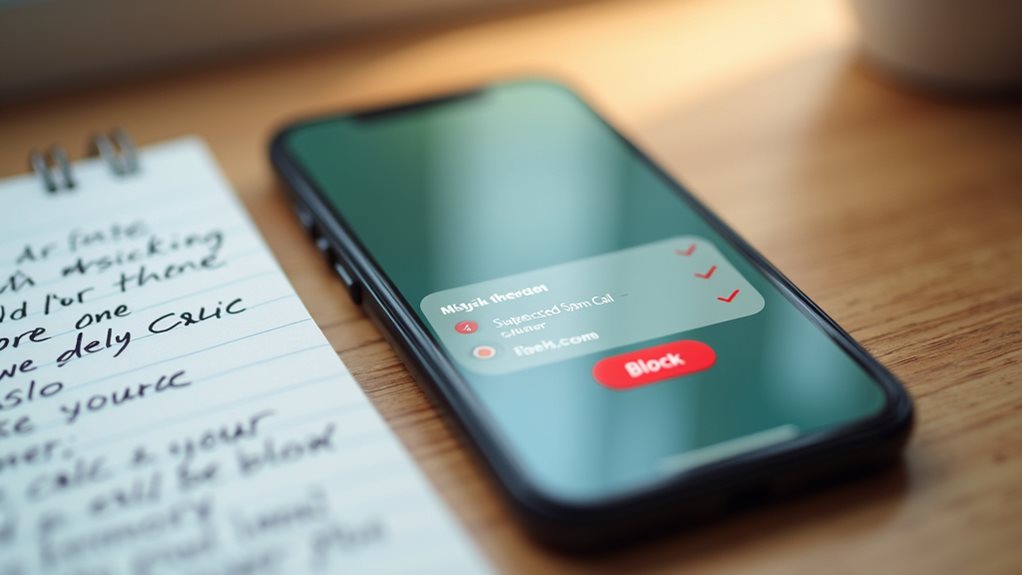
While most users remain unaware, your smartphone and other communication devices already contain powerful built-in tools to combat unwanted VoIP calls.
You’ll find robust call management options tucked away in your device settings that can greatly reduce robocall interruptions.
On iPhones, activate “Silence Unknown Callers” to automatically screen calls from numbers not in your contacts.
iPhone’s “Silence Unknown Callers” feature quietly intercepts calls from strangers, keeping unwanted interruptions at bay while you focus.
Android users can leverage the “Spam Protection” feature, which flags suspicious calls before you answer.
Both platforms allow you to block specific numbers with just a few taps.
Don’t overlook your carrier’s free protection services, which often include additional filtering capabilities.
Take fifteen minutes to explore these settings—you’ll be surprised how effectively your device can shield you from VoIP spam without installing third-party applications. Additionally, some VoIP call blocking regulations are designed to ensure compliance with local laws and protect users from unwanted calls.
Third-Party Apps That Combat Unwanted Calls
You’ll find remarkable protection through third-party apps like Nomorobo, Hiya, and RoboKiller that use advanced AI algorithms to identify and block spam calls before they interrupt your day.
These services often employ collaborative filtering, where users collectively report suspicious numbers to strengthen the system’s defensive capabilities.
Beyond basic call blocking, premium options now offer features like customizable block lists, scam call warnings, and even “answer bots” that waste scammers’ time while entertaining you with the recorded conversations. Moreover, utilizing these apps can mitigate risks associated with VoIP security threats, as they help secure user communications against unauthorized access.
Top Robocall Blocking Solutions
Several third-party apps have emerged as powerful allies in the fight against unwanted calls, offering features that go beyond your phone’s built-in protection.
These applications leverage advanced VoIP encryption and call authentication protocols to verify legitimate callers while filtering out potential threats.
When selecting a robocall blocking solution, you’ll want to take into account these standout options:
- Nomorobo – Blocks known spam numbers while allowing legitimate calls through
- Truecaller – Identifies unknown callers and provides community-based spam reporting
- Hiya – Offers real-time call screening with detailed caller information
- RoboKiller – Uses audio fingerprinting to identify and block robocalls
- YouMail – Replaces your voicemail with one that tricks spammers into thinking your number is disconnected
Furthermore, using these apps can significantly enhance VoIP security by reducing exposure to threats and providing peace of mind in your communications.
You don’t need to suffer through constant interruptions from unwanted callers anymore—these solutions provide effective protection.
AI-Powered Protection Services
Beyond the dedicated call-blocking applications mentioned above, AI-powered protection services represent the next frontier in VoIP security.
These sophisticated systems leverage ai-driven analytics to identify and block spam calls before they ever reach your device. Unlike traditional blockers that rely on blacklists, AI solutions analyze calling patterns, speech characteristics, and behavioral markers to flag suspicious activity.
You’ll find these services particularly effective because they employ predictive spam filtering that adapts to new threats in real-time. As scammers evolve their tactics, the AI evolves its defense mechanisms.
Many premium services now offer features like voice fingerprinting and sentiment analysis to determine caller legitimacy with remarkable accuracy. Additionally, incorporating advanced encryption measures is essential to ensure that your business communications remain confidential and protected from eavesdropping.
Consider investing in a thorough AI protection service if you’re dealing with persistent robocall problems, especially if you conduct business through your phone.
Collaborative Filtering Platforms
While traditional blockers offer basic protection, collaborative filtering platforms represent a community-driven approach to tackling unwanted calls. These platforms leverage collaborative filtering techniques that analyze data from millions of users to identify and block spam calls before they reach you.
- Nomorobo and YouMail use vast databases built from user feedback systems to identify patterns in robocall behavior.
- Truecaller’s community-based directory helps identify unknown callers through crowdsourced information.
- Hiya combines user reports with advanced analytics to create robust protection against emerging threats.
- RoboKiller employs answer bots that waste scammers’ time while gathering intelligence.
- Community Call Blocker allows you to contribute to and benefit from a shared database of known spam numbers.
Additionally, adopting effective security measures like enabling encryption across all VoIP traffic can enhance the protection against spam calls.
How to Register With the National Do Not Call Registry
Registering with the National Do Not Call Registry represents one of your strongest defenses against unwanted telemarketing calls, including VoIP spam and robocalls.
The registering procedures are straightforward—visit DoNotCall.gov or call 1-888-382-1222 from the phone number you wish to register. Your number remains on the registry indefinitely unless you decide to remove it or disconnect the line.
The call registry benefits become apparent within 31 days of registration, when legitimate telemarketers must stop contacting you.
Remember, though, this won’t block all unwanted calls. Political organizations, charities, survey takers, and companies with whom you’ve recently done business can still reach you.
For continued protection, report violations through the FTC’s complaint system, strengthening enforcement against persistent offenders.
Implementing Call Filtering and Screening Techniques
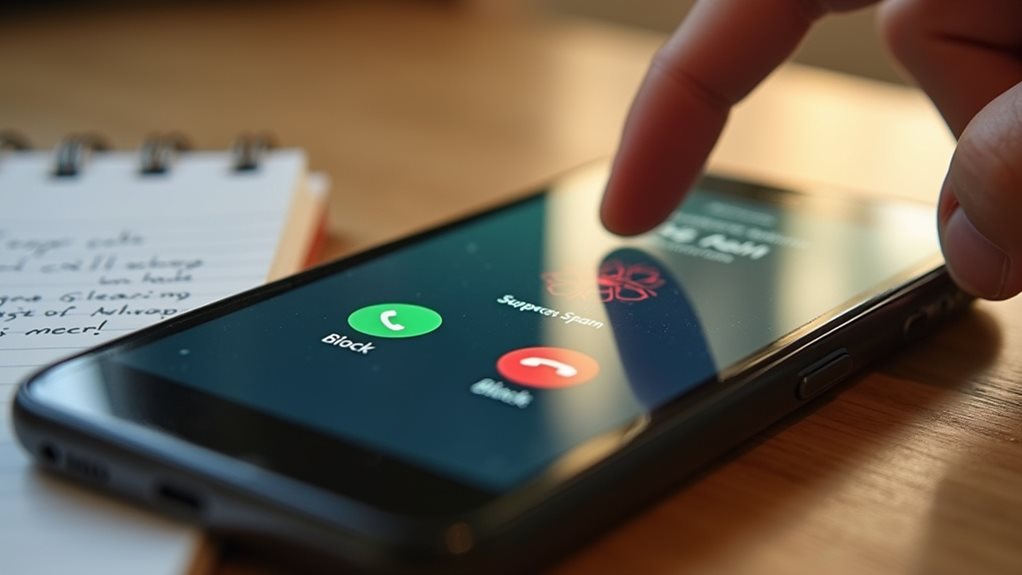
Modern call filtering technology offers powerful protection against the rising tide of VoIP spam and robocalls.
Cutting-edge call filtering shields your communication channels from the growing onslaught of digital spam.
You’ll find numerous call screening techniques that can greatly reduce unwanted interruptions while guaranteeing important calls still reach you.
- Install reputable call-blocking apps that use advanced spam identification methods to detect suspicious patterns.
- Configure your VoIP service’s built-in filtering options to automatically screen calls from unknown numbers.
- Utilize “Do Not Disturb” settings during specific hours while allowing calls from your contacts list.
- Set up custom voicemail greetings that require callers to press a number to connect, defeating automated systems.
- Enable simultaneous ring features to forward suspicious calls to a secondary screening service.
These protective measures act as your first line of defense, working silently in the background to maintain your peace of mind. Additionally, implementing robust encryption protocols is essential for safeguarding sensitive information during VoIP communications.
Recognizing Common VoIP Scam Patterns
Even the best filtering systems can’t catch everything, which makes personal vigilance your most powerful defense.
You’ll need to familiarize yourself with common scam tactics to protect yourself effectively. Be wary of callers claiming to represent government agencies, tech companies, or financial institutions who demand immediate payment or personal information. These fraudsters often create artificial urgency to cloud your judgment.
Pay attention to identifying spoofed numbers, which often appear local or from legitimate organizations. If a caller requests payment via gift cards, wire transfers, or cryptocurrency, that’s a notable red flag.
Remember that legitimate businesses won’t threaten immediate legal action over the phone. Trust your instincts—if something feels off about the call, hang up and verify independently through official channels. Additionally, keep in mind that caller ID spoofing is a common technique used by scammers to appear trustworthy.
Best Practices for Handling Suspicious Calls
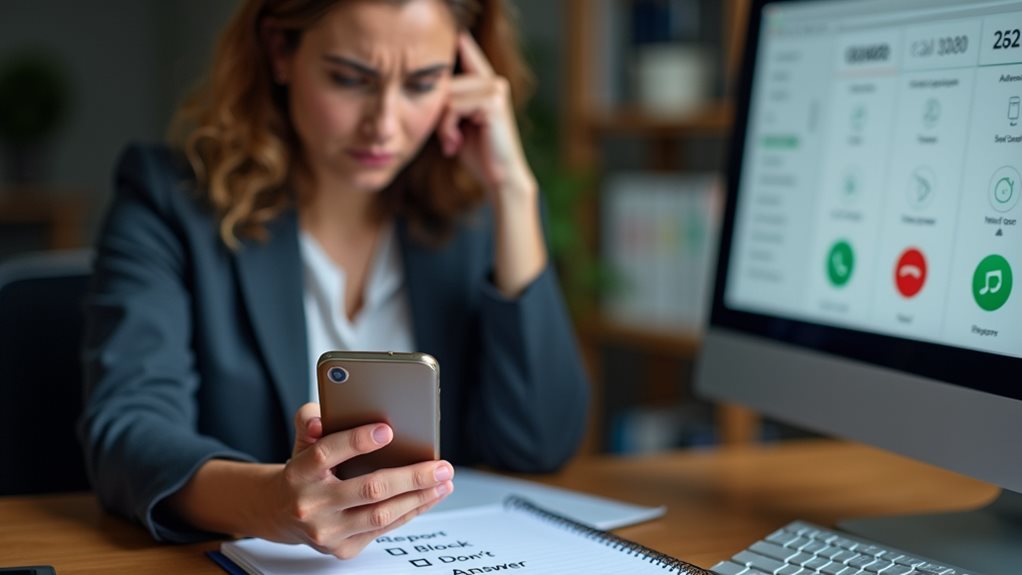
You’ll protect yourself from VoIP scammers by always verifying the caller’s identity before sharing any personal information.
When in doubt, don’t hesitate to block unknown numbers using your phone’s built-in features or third-party apps designed for this purpose.
If you’ve encountered suspicious or clearly fraudulent calls, report them immediately to your service provider and the FTC’s complaint portal to help authorities track and combat these digital predators.
Implementing strong security measures, especially with unencrypted VoIP, is critical to safeguarding your sensitive information from potential breaches.
Verify Caller Identity
Why should you trust that unfamiliar number flashing on your screen? With sophisticated VoIP scams on the rise, implementing robust caller verification techniques has become critical.
You’ll need to develop a strategic approach to identity authentication methods before engaging with unknown callers.
- Use reverse phone lookup services to cross-reference unfamiliar numbers with public databases
- Enable your carrier’s built-in spam detection and filtering options
- Install third-party call screening apps that provide real-time caller reputation scores
- Request that legitimate callers identify themselves through specific verification questions
- Consider implementing voice biometric technology for frequently contacted businesses
Block Unknown Numbers
When persistent robocallers disrupt your day, blocking unknown numbers becomes your first line of defense against digital intrusions. Most modern smartphones and VoIP services offer built-in options to automatically reject calls from unidentified sources, giving you immediate relief from unwanted interruptions.
Consider implementing number whitelisting, which allows calls only from contacts you’ve pre-approved. This creates a protective barrier between you and potential scammers. Many VoIP providers also offer advanced call screening features that require unrecognized callers to identify themselves before your phone rings.
You don’t need to block all unknown numbers permanently. Instead, activate these features during your busiest hours or when spam calls typically increase.
Remember that legitimate callers with important information can always leave voicemails, which you can review at your convenience.
Report Malicious Calls
Reporting malicious calls strengthens the collective defense against VoIP spam and fraud campaigns. When you receive suspicious calls, following proper reporting procedures not only protects you but additionally helps authorities track patterns and enforce legal repercussions against perpetrators.
Here’s how to effectively report unwanted calls:
- Forward suspicious text messages to 7726 (SPAM) to alert your carrier
- File complaints with the FTC through their dedicated complaint portal
- Contact your state’s attorney general office for local enforcement action
- Provide detailed information including the caller’s number, time, and nature of the call
- Keep records of all reported incidents for potential legal proceedings
Don’t dismiss these steps as ineffective—aggregated reports help build cases against organized spam operations.
Your participation in reporting helps create a more secure telecommunications environment for everyone.
Advanced Security Measures for Business VoIP Systems

Businesses that rely heavily on VoIP communications need robust security strategies beyond basic protection measures.
You’ll want to implement end-to-end encryption techniques that safeguard your voice data during transmission, preventing eavesdropping and man-in-the-middle attacks.
Consider network segmentation to isolate your VoIP traffic from other business operations, creating barriers that contain potential breaches.
Don’t overlook the importance of regular security audits and penetration testing for your VoIP infrastructure.
These evaluations help identify vulnerabilities before malicious actors can exploit them.
You should also establish strict access controls, requiring multi-factor authentication for administrative functions and system changes.
Finally, keep your VoIP software and firmware updated to patch security flaws, and train your staff to recognize social engineering attempts targeting your voice communications.
Frequently Asked Questions
Can Voip Spam Bypass Call Blocking Technologies?
Yes, sophisticated VoIP spam can bypass call blocking technologies. VoIP vulnerabilities allow spammers to spoof numbers and circumvent traditional spam detection. You’ll need layered protection methods as spammers continuously adapt their techniques to evade filters.
How Do Spammers Obtain My Voip Number?
Spammers get your VoIP number through number harvesting techniques like data breaches, website scraping, and purchasing lists. They’ll also use auto-dialers that randomly generate numbers, bypassing VoIP security measures you’ve implemented.
Are Government Agencies Doing Enough to Combat Robocalls?
No, despite increased regulatory measures like the TRACED Act, you’re still bombarded with unwanted calls. Government agencies haven’t implemented sufficient enforcement actions to effectively combat the evolving tactics of international robocallers targeting your VoIP number.
Can I Sue Companies That Repeatedly Violate Do-Not-Call Regulations?
Yes, you can sue companies violating do-not-call regulations. You’re entitled to legal remedies of up to $1,500 per violation under consumer rights laws. Document calls, send demand letters, and consider small claims court action.
Will Switching Voip Providers Reduce the Amount of Spam Calls?
Switching providers may help if you choose one with strong anti-spam VoIP features. Look for providers with good reputation for call filtering, STIR/SHAKEN implementation, and robust spam protection services. Results aren’t guaranteed though.
Final Thoughts
You’re now equipped to fight back against the VoIP spam epidemic. By combining technological solutions with vigilant practices, you’ll dramatically reduce unwanted calls disrupting your day. Remember, it’s a multi-layered approach: utilize built-in features, third-party apps, and government resources while staying informed about evolving scam tactics. Don’t just react to robocalls—take proactive steps to protect your peace of mind and personal information.