
VoIP encryption is critical for keeping your calls private in today’s digital environment. Without it, your conversations face risks like packet sniffing and man-in-the-middle attacks. Modern security relies on two key protocols: TLS for securing connection signals and SRTP for encrypting voice data. By implementing end-to-end encryption with strong algorithms like AES-256, you’ll protect sensitive information and build client trust. Regular security audits and staff training further strengthen your communication shield against increasingly sophisticated threats.
The Evolution of VoIP Technology
While traditional telephone systems dominated communications for decades, Voice over Internet Protocol (VoIP) has revolutionized how we connect with one another since its inception in the 1990s.
The early VoIP history featured choppy calls and limited functionality, but you’ve likely noticed the dramatic improvements in quality and reliability over the years.
Technological advancements have transformed VoIP from a novelty into a vital business tool. You’ll find today’s systems offer HD audio, video integration, and sophisticated features like automatic transcription.
What started as simple computer-to-computer calls has evolved into extensive communication platforms that you can access from any device with an internet connection.
These advancements are built upon packet formation and transmission protocols, ensuring reliable and efficient communication.
As you consider your communication needs, understanding this evolution helps you appreciate why modern VoIP solutions prioritize both convenience and security.
Common Security Vulnerabilities in Unencrypted VoIP
Despite the remarkable evolution of VoIP technology, the security aspect hasn’t always kept pace with its functional advancements. When you’re using unencrypted calls, you’re fundamentally broadcasting your conversations to potential eavesdroppers.
VoIP threats like packet sniffing allow attackers to intercept and reconstruct your calls with minimal technical expertise. Your business communications face additional risks beyond simple eavesdropping.
With unprotected VoIP, your sensitive business calls are an open book to technically unsophisticated attackers wielding basic sniffing tools.
Man-in-the-middle attacks can redirect your calls through malicious servers, while SIP hijacking might enable criminals to impersonate you or your colleagues. Without encryption, even your voicemail messages remain vulnerable to unauthorized access.
Remember that these vulnerabilities don’t just compromise your privacy—they potentially expose sensitive customer information, intellectual property, and strategic discussions that could damage your reputation and bottom line if intercepted. Implementing strong security measures is essential for safeguarding your VoIP communications against these threats.
How VoIP Encryption Protocols Work
VoIP encryption protocols protect your conversations through sophisticated end-to-end encryption methods that transform your voice data into unreadable code for anyone without proper decryption keys.
You’ll encounter two primary protocols when implementing secure VoIP: Transport Layer Security (TLS), which secures the signaling pathway, and Secure Real-time Transport Protocol (SRTP), which specifically encrypts the voice data packets themselves.
When you’re setting up your VoIP system, you’ll need to evaluate which protocol best suits your security needs—TLS offers connection security while SRTP provides the actual media encryption that prevents eavesdropping on calls. Additionally, using strong encryption standards like AES with proper key lengths can significantly enhance the overall security of your VoIP communications.
End-to-End Encryption Methods
As your voice travels across the internet during VoIP calls, end-to-end encryption serves as the invisible shield protecting your conversations from prying ears. This technology guarantees that only you and your recipient can decipher the content, transforming your speech into complex code that remains indecipherable to anyone intercepting the transmission.
You’ll find various encryption algorithms powering these protections, from AES-256 to RSA and Diffie-Hellman key exchanges. When selecting a VoIP service, verify it employs true end-to-end encryption rather than transport encryption alone.
Today’s privacy challenges extend beyond casual eavesdropping to sophisticated surveillance methods, making robust encryption critical. Some services might claim “encrypted” status while only securing portions of the communication path. For maximum security, choose platforms that keep encryption keys exclusively in your and your recipient’s possession. Additionally, integrating strong credentials helps fortify your security against unauthorized access and cyber threats.
TLS Vs SRTP Protocols
When securing your voice communications, understanding the fundamental difference between TLS and SRTP protocols becomes essential for making informed decisions about your VoIP security.
TLS advantages include its ability to protect signaling information and establish secure connections between endpoints, effectively preventing man-in-the-middle attacks. You’ll find TLS implementation relatively straightforward with built-in support across most platforms.
SRTP, while powerful for encrypting the actual media streams of your calls, comes with notable SRTP limitations. It doesn’t protect signaling data and often requires additional implementation efforts.
Many organizations face challenges with SRTP key exchange mechanisms, which can create compatibility issues between different systems. To enhance security, it’s crucial to implement DTLS-SRTP for encrypted media protection, ensuring that both voice and video data remain confidential during transmission.
For thorough protection, you’ll want to implement both protocols—TLS for signaling security and SRTP for media encryption—rather than viewing them as competing options.
Implementing End-to-End Encryption for Voice Calls
Securing your voice communications requires implementing robust end-to-end encryption protocols that protect conversations from potential eavesdroppers.
When you’re setting up voice call security systems, you’ll need to select appropriate end-to-end protocols that match your organization’s needs and technical capabilities.
You’ll find that solutions like Signal Protocol and ZRTP offer strong protection by encrypting voice data directly between endpoints, guaranteeing that even service providers can’t access your conversations.
Don’t overlook key verification methods—they’re crucial for confirming your connection hasn’t been compromised. Many VoIP platforms now integrate these security features, but you’ll need to verify they’re properly configured.
Remember that proper implementation requires balancing security requirements with call quality considerations, as encryption processes can sometimes introduce minimal latency to your communications. Additionally, it is important to stay updated on the latest VoIP security trends to ensure your systems are protected against emerging threats.
SIP TLS and SRTP: The Building Blocks of Secure VoIP
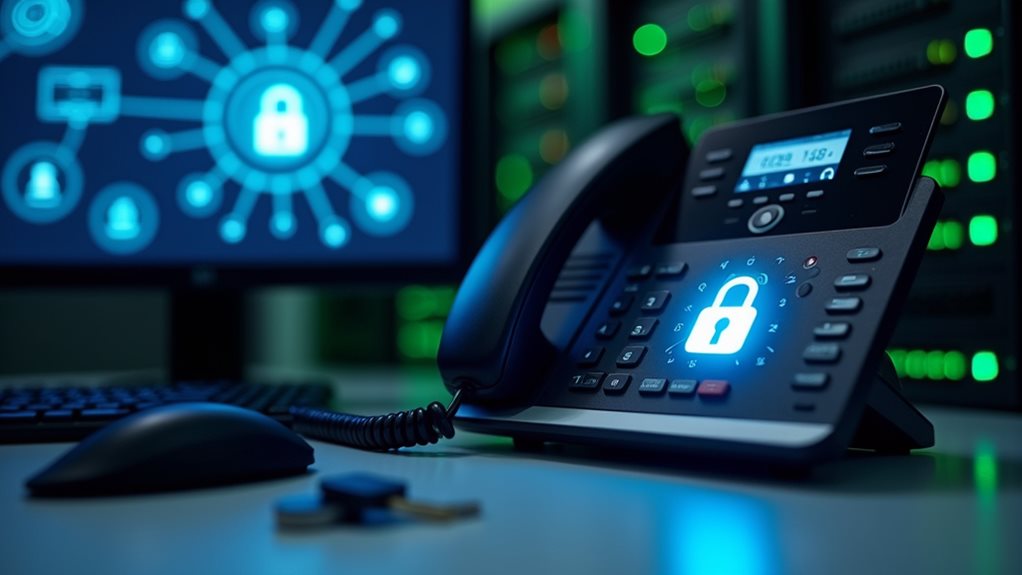
You’ll need both TLS to shield your SIP signaling from prying eyes and SRTP to encrypt the actual voice data flowing through your VoIP system.
Proper certificate management isn’t just a technical checkbox—it’s crucial for maintaining the cryptographic trust chain that powers your secure communications. Implementing robust encryption protocols helps ensure that your conversations remain confidential and secure from potential threats.
When you implement these complementary protocols correctly, you’re creating a robust security framework that protects your conversations from unauthorized access while maintaining call quality.
TLS Protects Signaling Traffic
Although many VoIP implementations focus solely on encrypting voice data, the signaling traffic remains equally vulnerable without proper protection.
When you communicate via VoIP, your call setup information travels through SIP (Session Initiation Protocol) packets that contain sensitive details about participants, phone numbers, and connection parameters.
Transport Layer Security (TLS) provides crucial signaling encryption by creating a secure tunnel for this metadata.
Without TLS, attackers could intercept call setup information and potentially eavesdrop or manipulate connections.
You’ll need to configure your VoIP systems to use TLS on ports 5061 (instead of the standard unencrypted 5060) and guarantee proper certificate management.
Traffic protection through TLS requires minimal performance overhead while delivering notable security benefits.
Remember that even with perfect voice encryption, compromised signaling can undermine your entire communication security posture.
In VoIP, the choice between UDP and TCP protocols plays a significant role in the overall quality and reliability of your calls.
SRTP Secures Voice Data
While TLS protects your call setup information, Secure Real-time Transport Protocol (SRTP) tackles the equally critical task of encrypting actual voice data during transmission.
When you’re speaking on a VoIP call, SRTP transforms your voice packets into encrypted data that remains unreadable to anyone who might intercept them.
SRTP advantages include low computational overhead, minimal bandwidth expansion, and compatibility with existing RTP implementations. You’ll appreciate how it maintains call quality while adding security—something traditional phone systems can’t match.
However, SRTP limitations deserve consideration. It doesn’t encrypt all header information, potentially revealing some metadata.
You’ll also need to guarantee proper key management, as SRTP requires secure key exchange mechanisms to function effectively. Without proper implementation, your encrypted calls may still have vulnerabilities that sophisticated attackers could exploit. Additionally, understanding VoIP security risks is essential to ensure comprehensive protection against potential threats.
Certificate Management Essentials
Effective certificate management forms the backbone of secure VoIP communications when implementing SIP TLS and SRTP protocols. You’ll need to establish robust practices for handling the complete certificate lifecycle, from initial creation through renewal and eventual revocation.
Many organizations overlook the importance of certificate expiration dates, leading to unexpected service disruptions.
Implement secure storage solutions for your private keys and certificates to prevent unauthorized access. You should store these sensitive credentials in hardware security modules or encrypted repositories rather than in plaintext files on your servers.
Remember that your certificate security is only as strong as your weakest management practice. By establishing clear certificate management workflows and automated monitoring systems, you’ll maintain the integrity of your encrypted VoIP communications while minimizing administrative overhead. Additionally, following best practices for VoIP security will further enhance your overall communication security.
Business Benefits of Encrypted Communication
Because security concerns continue to rise in today’s digital environment, businesses can’t afford to overlook the competitive advantages of encrypted communication systems.
When you implement robust encryption for your VoIP communications, you’re not only protecting sensitive information—you’re improving business efficiency by preventing costly data breaches and maintaining operational continuity.
Your clients will notice the difference too. Encrypted communications demonstrate your commitment to safeguarding their information, building trust that translates into lasting relationships.
Encryption isn’t just security—it’s a visible commitment to client protection that builds unshakable business trust.
This communication reliability becomes a marketable differentiator in crowded industries where security matters. You’ll also find compliance with industry regulations becomes simpler, reducing potential penalties and administrative burdens.
The initial investment in encryption technology quickly pays dividends through risk reduction and improved stakeholder confidence.
Regulatory Compliance and VoIP Privacy Standards
As organizations increasingly adopt VoIP technologies, steering through the complex terrain of regulatory compliance becomes crucial for maintaining legal operations.
You’ll need to understand which compliance frameworks apply to your communication systems, as requirements vary by industry and region.
HIPAA, GDPR, and CCPA represent just a few of the privacy regulations that might affect your VoIP implementation. Each framework establishes different standards for data protection, user consent, and breach notification protocols.
When deploying encrypted VoIP solutions, you should regularly audit your systems against applicable regulations.
Documentation of compliance efforts isn’t just bureaucratic paperwork—it’s your protection against potential penalties.
Consider working with compliance specialists who understand both telecommunications technology and regulatory requirements to develop a thorough strategy that balances security needs with legal obligations.
Best Practices for Securing Your VoIP Infrastructure
While implementing encryption provides a solid foundation for VoIP security, it’s merely the beginning of a thorough protection strategy. You’ll need to deploy multiple layers of protection to fully secure your communications infrastructure.
Start by conducting regular security audits to identify vulnerabilities in your network. Implement strong password policies and enable two-factor authentication for all VoIP accounts.
Consider utilizing advanced encryption methods like TLS for signaling and SRTP for media streams to protect your data in transit.
Don’t overlook physical security—restrict access to VoIP equipment and servers. Keep your systems updated with the latest security patches and firmware.
Finally, train your staff to recognize social engineering attempts that could compromise your VoIP security. Remember, the strongest encryption becomes ineffective if users inadvertently provide access to malicious actors.
Future Trends in Voice Communication Security
Looking toward the horizon of voice communication security, you’ll notice several emerging technologies poised to revolutionize how we protect VoIP systems.
As privacy concerns continue to mount, you’ll need to stay ahead of these developments to guarantee your communications remain secure in an increasingly connected world.
- Quantum encryption protocols that make eavesdropping mathematically impossible
- AI-powered anomaly detection systems that identify suspicious calling patterns in real-time
- Blockchain verification for caller identity to eliminate spoofing attacks
- Biometric voice authentication replacing traditional password systems
- Zero-knowledge proof systems allowing secure communication without revealing metadata
These innovations aren’t just theoretical—they’re already being implemented by forward-thinking organizations.
Frequently Asked Questions
Does Voip Encryption Impact Call Quality or Performance?
Yes, VoIP encryption can affect performance. You’ll notice slight call latency during encrypted calls. Proper codec selection helps minimize these impacts, balancing security with quality while maintaining clear conversations despite the added encryption overhead.
Can Encrypted Voip Calls Be Recorded for Training Purposes?
Yes, you can record encrypted VoIP calls for training purposes, but you’ll need specialized encrypted call recording solutions that maintain encryption integrity. Always guarantee training compliance by notifying participants that calls are being recorded.
How Much Additional Bandwidth Does Encrypted Voip Require?
Encrypted VoIP typically adds only 5-15% encryption overhead to your bandwidth requirements. You’ll notice minimal impact as modern encryption protocols are designed to be efficient while maintaining call quality and security.
Are Free Voip Services Adequately Encrypted for Personal Use?
Most free VoIP services aren’t adequately encrypted for truly private communications. You’ll face user privacy concerns with these services as they often have free service vulnerabilities, making your personal calls potentially vulnerable to eavesdropping.
Can Government Agencies Bypass Voip Encryption With Proper Authorization?
Yes, with legal authorization, government agencies can bypass VoIP encryption through various means. They’ll use court orders to compel providers to grant access or deploy specialized tools for surveillance, raising considerable legal implications for privacy.
Final Thoughts
You’re now equipped to make your VoIP communications truly private. By implementing end-to-end encryption, utilizing SIP TLS with SRTP protocols, and following industry best practices, you’ll protect sensitive conversations from potential threats. Don’t wait for a security breach to take action—your business’s reputation and compliance status depend on it. As voice communication technology evolves, staying ahead of security trends isn’t just smart—it’s crucial for your digital future.